“CULTIVATION OF MEDICINAL PLANTS AND AROMATIC PLANTS”
Date: 17/07/2026
Venue: New Seminar Hall, ARAC, Manchi Hill
Speaker: Prof. (Dr.) Digambar Nabhu Mokat
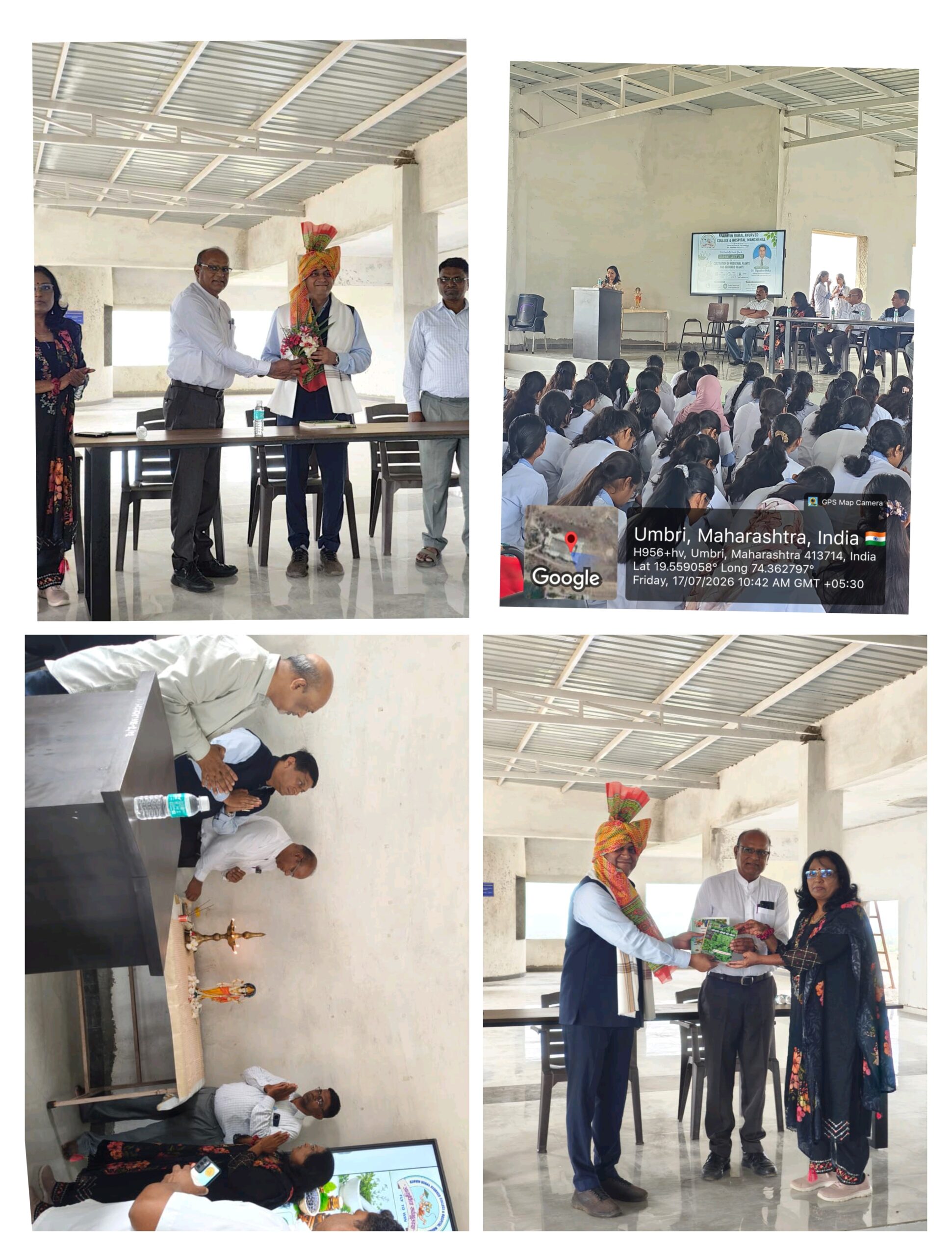
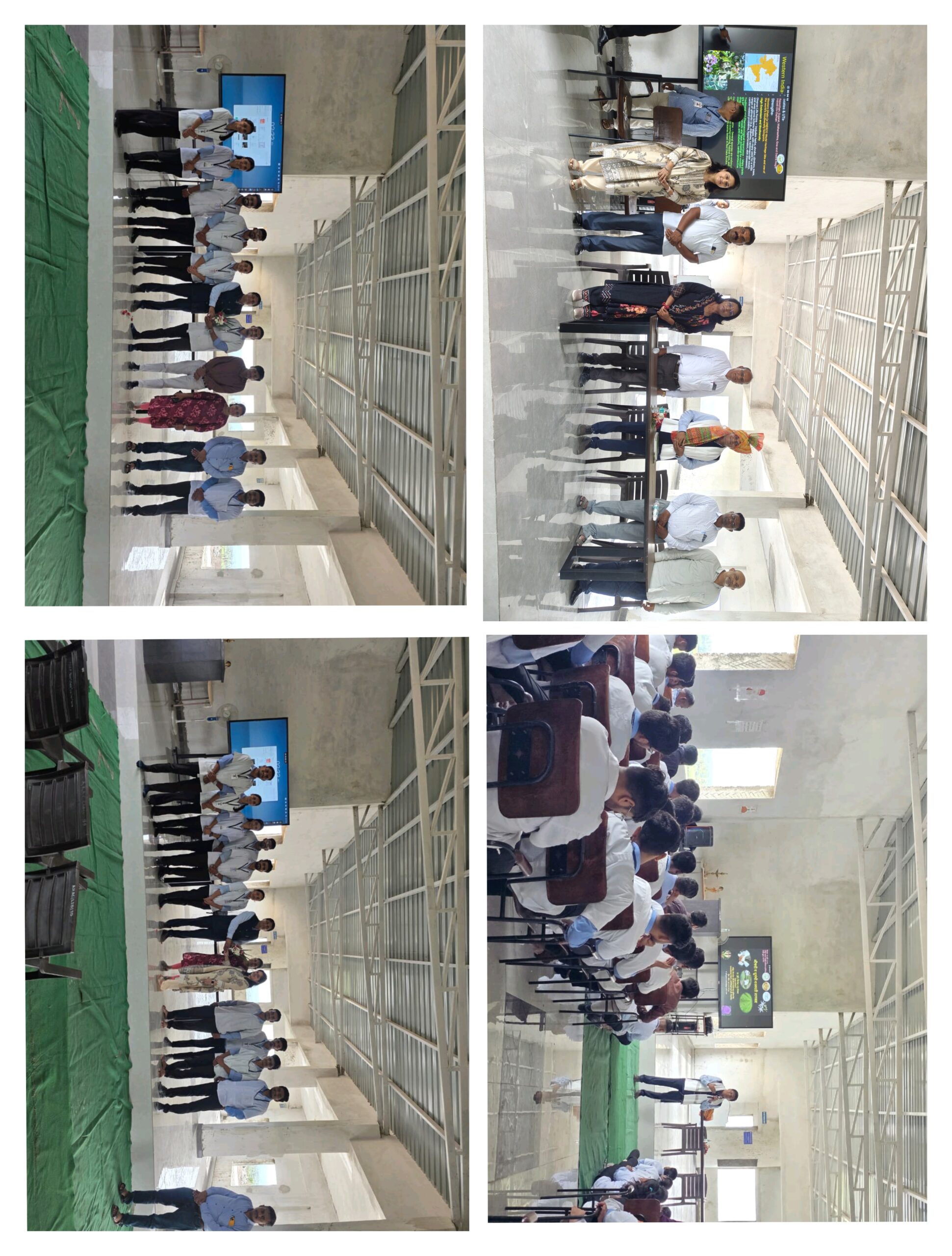
The Department of Dravyaguna Vigyan, in association with the Student Support and Career Guidance Cell and Research Innovation and Entrepreneurship Development Cell organized an Expert Lecture on “Cultivation of Medicinal Plants and Aromatic Plants” on 17th July 2026 at the New Conference Hall of Ashvin Rural Ayurved College & Hospital, Manchi Hill, Sangamner (Ahilyanagar). The program witnessed enthusiastic participation from undergraduate students, interns, faculty members, and academic staff.
The event was organized with the objective of enhancing student’s understanding of medicinal and aromatic plants, their cultivation practices, economic importance, and their role in the Ayurvedic healthcare system. The lecture aimed to bridge the gap between traditional Ayurvedic knowledge and modern scientific approaches to medicinal plant cultivation and conservation.
The program commenced with a formal inauguration and welcome address. The organizing committee warmly welcomed the distinguished resource person, Dr. Digamber Mokat, Professor, Department of Botany, Savitribai Phule Pune University, Pune. The dignitaries highlighted the growing importance of medicinal plant cultivation in the context of increasing demand for herbal medicines, sustainable agriculture, and biodiversity conservation.
During his lecture, Dr. Mokat provided an in-depth overview of medicinal and aromatic plants, emphasizing their significance in healthcare, agriculture, and the pharmaceutical industry. He discussed the botanical characteristics, climatic requirements, soil conditions, propagation techniques, cultivation practices, pest and disease management, harvesting methods, and post-harvest processing of important medicinal plant species. Special attention was given to plants commonly used in Ayurveda and their commercial potential.
The speaker elaborated on various government initiatives, cultivation schemes, and opportunities available for farmers, researchers, and entrepreneurs in the medicinal plant sector. He also highlighted the need for conservation of endangered medicinal plant species and encouraged students to contribute to sustainable utilization and scientific cultivation practices.
The lecture included several practical examples and case studies that demonstrated successful medicinal plant cultivation models. Students were introduced to the latest trends in herbal farming, organic cultivation methods, quality control measures, and value-addition techniques. The resource person explained how scientific cultivation can improve yield, ensure quality raw materials for Ayurvedic formulations, and provide additional income opportunities for rural communities.
The session proved to be highly informative, educational, and inspiring. Participants gained valuable insights into the practical aspects of medicinal plant cultivation and its relevance to Ayurvedic medicine. The lecture successfully broadened the student’s knowledge and strengthened their understanding of the relationship between botany, agriculture, and Ayurveda.
The program concluded with a vote of thanks expressing gratitude to Dr. Digamber Mokat for sharing his expertise, to Dr. Shyamal Nirmal, Principal, for his guidance and support, and to all faculty members, students, and organizers for their active participation. The lecture proved to be highly beneficial, broadening horizons of students and faculty while fostering greater awareness of medicinal and aromatic plant cultivation.